Christmas Light Timers and What the Lights Actually Cost to Run
LED C9 bulbs draw a fraction of what old incandescent strings did. Here is a realistic estimate of what a lit roofline adds to a Kansas December power bill.
People still ask what Christmas lights do to the power bill, and the honest answer is: with LEDs, almost nothing. The question is a holdover from incandescent bulbs, which genuinely did cost real money to run.
That changed completely, and the numbers are worth walking through so you can stop worrying about it.
The old numbers vs the new ones
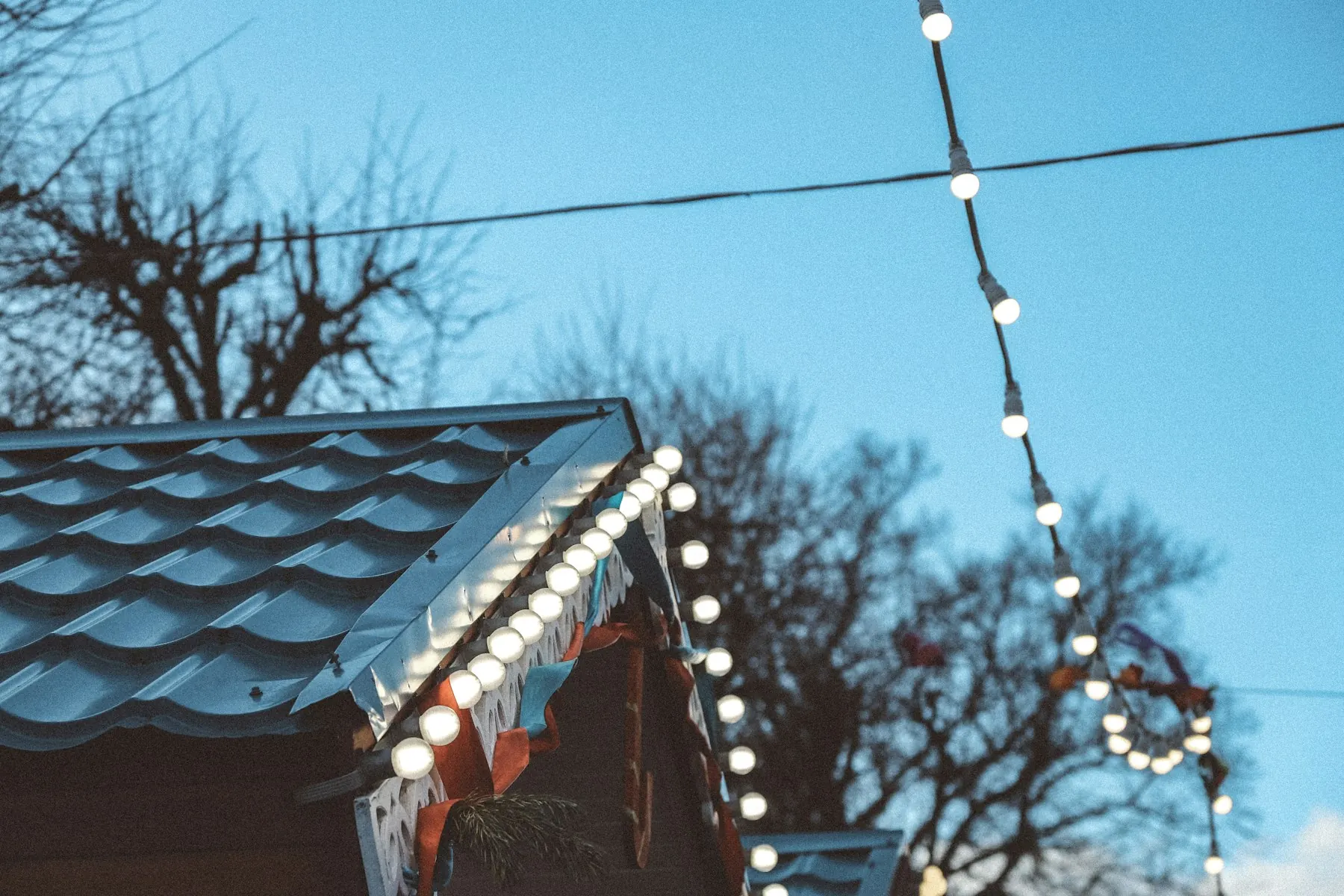
A traditional incandescent C9 bulb — the big classic bulb — typically drew somewhere around five to seven watts. That is a small space heater's worth of draw when you multiply it by a hundred bulbs on a roofline.
An LED C9 bulb, the same size and the same shape, typically draws under one watt. Some are well under. The visible result is close to identical from the street, which is the entire reason the industry switched.
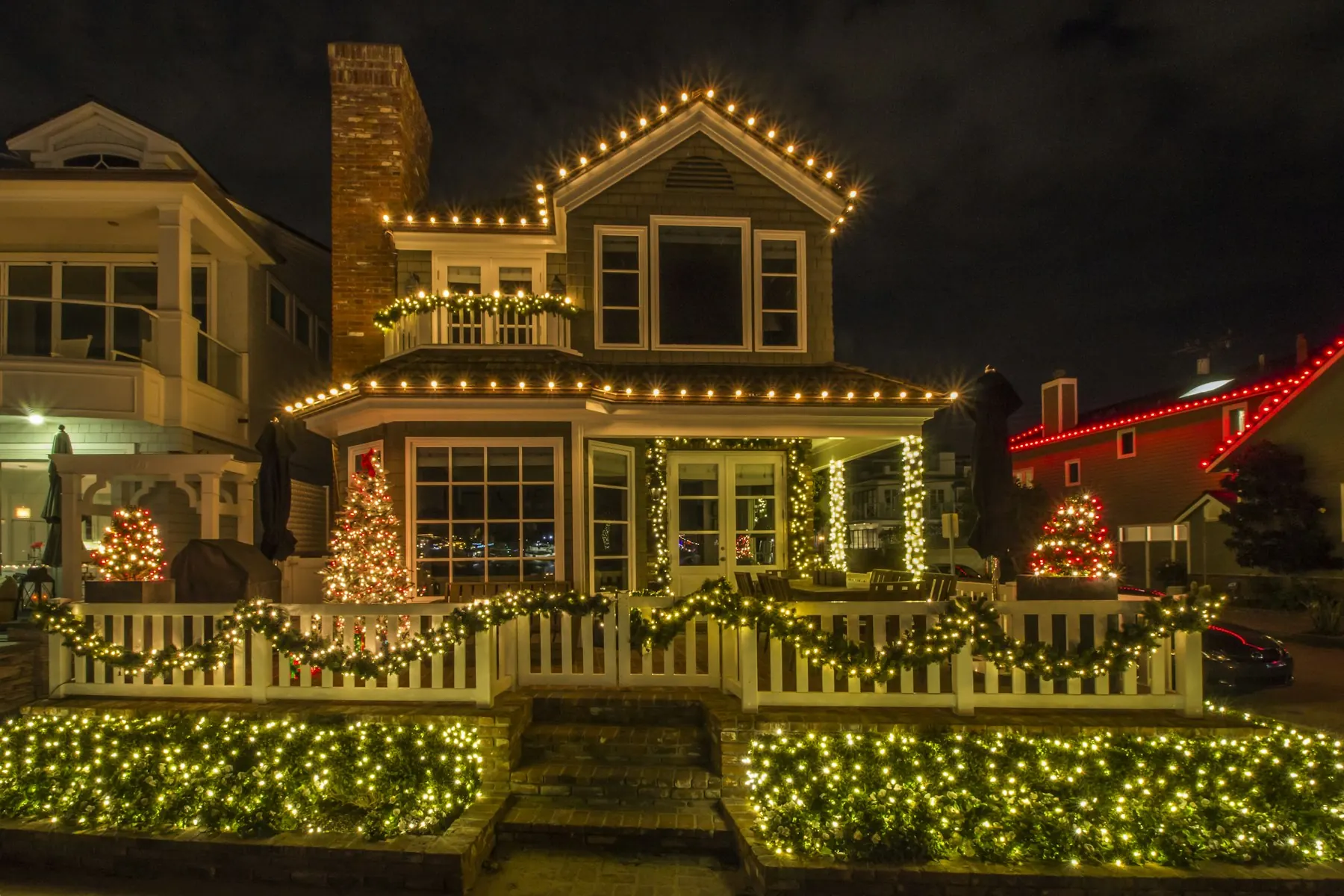
Do the rough arithmetic on a typical Johnson County front. A single-story roofline runs 100 to 180 feet. C9 bulbs are usually spaced about a foot apart, so call it 150 bulbs. At under a watt each, the whole run is drawing on the order of 100 watts or so — roughly what an old incandescent bedroom lamp used, for your entire roof.
Run that six hours a night for six weeks and you are looking at a handful of kilowatt-hours total. At typical Kansas residential electricity rates, that is roughly a dollar or two for the season. Not per week. For the season.
The same roofline in incandescent C9 would have been drawing something like 750 to 1,000 watts, which is where the old warnings about tripped breakers and not daisy-chaining more than three strings came from. Those warnings were correct at the time. They mostly do not apply anymore.
What add-ons change
Very little, but here is the shape of it.
A wrapped tree, lit garland, path lights and shrub nets are all LED as well, and each adds a modest amount to the total. A house with a full roofline, two wrapped trees, a wreath and a run of garland is still drawing less than a hair dryer. If you are running RGB color at $2 per foot, draw is in the same general neighborhood as warm white — color LEDs are not meaningfully hungrier.
Inflatables are the exception worth naming. Those run a continuous blower motor, and a blower draws far more than an entire LED roofline does. If your December bill jumps noticeably, the inflatable snow globe is a likelier culprit than the roof.
Why the timer matters more than the bulbs
Since the electricity is nearly free, the timer is not really a money-saving device. It is a convenience and a consistency device, and that is a better reason to have one.
A timer means the lights come on at dusk without anyone doing anything. That matters in Kansas City in December because dusk moves — the sun sets before 5pm around the solstice, and it is dark by the time most people get home. A timer means you do not walk in at 6:15 and realize the front of the house has been dark for an hour.
It also means the lights go off at a sensible hour instead of running until someone remembers. And it means they behave the same when you are out of town for the holidays, which is the week you most want the house to look occupied.
Every Peak Season Lighting install includes a timer. It also means the install date and the turn-on date are separate decisions. Lights can go up in October and stay dark until whatever date you pick — most people choose the day after Thanksgiving. That separation is the single most useful thing about the way the schedule works, and it is covered in when to hang Christmas lights in Kansas City.
Choosing a schedule
There are basically three approaches.
- Dusk to 10 or 11pm. The common choice, about six hours a night. Covers the entire window when anyone is actually outside looking at houses.
- Dusk to midnight. Adds an hour or two. Reasonable on a busy street, or through the week between Christmas and New Year's.
- Dusk to dawn. Roughly double the run time for almost no added benefit. Nobody is admiring your roofline at 3am, and it puts twice the hours on the bulbs over the years.
Six hours is the right default. The cost difference between six and twelve hours is small enough to ignore, but the hours difference does matter for equipment life over multiple seasons, which is a real consideration when the same custom-cut set goes back up on your house every year.
Practical wiring notes
A full residential LED roofline plugs into a standard exterior GFCI outlet without drama. That is a change from twenty years ago and it is worth knowing if you are still working from old assumptions.
A few things that still matter:
Use outdoor-rated cord and outdoor-rated connections, and keep connection points off the ground where water pools and where a snow shovel can find them. GFCI outlets do trip when moisture gets into a connection, and a tripped GFCI after an ice storm is by far the most common reason a whole side of a house goes dark. It is usually not a bulb problem.
If a section does go dark, check the outlet and the GFCI reset before assuming the lights failed. If it is actually the lights, in-season repairs are included at no charge — that is what repair service is for, and after a Kansas ice event it gets used.
What this means for the buying decision
If you were holding off on lighting the whole house because you were worried about running cost, that concern is retired. Electricity is not the expensive part. Labor, equipment and the ladder work are.
Roofline is $13 per foot, which puts most single-story fronts in Overland Park, Prairie Village or Mission at $1,300 to $2,340, and most two-story houses with peaks at $2,340 to $3,640. That includes the commercial-grade C9 LED bulbs, the custom-cut cord, plastic clips, the timer, in-season repairs, January takedown and off-season storage. Full breakdown on the pricing page.
Running cost is a rounding error against that. Decide based on the look you want and the footage you want lit.
Get a price
Send your address at /#quote and we will measure your roofline from satellite imagery and text you a price within 24 hours. No sales visit. A timer is included either way, so the lights come on at dusk without you thinking about it.